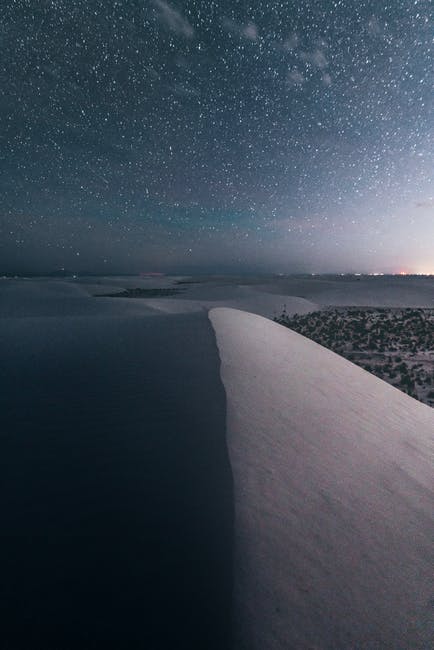
Friday’s sunrise would have provided a spectacular view of the Moon, Jupiter and the entire night sky. They were very near each other with Jupiter just above them. Although they might appear to be very close in the sky, they really weren’t. Distance from Jupiter to the Moon is approximately 510 millions miles one million kilometers. It would have taken the Space Shuttle three years to cover that distance at its highest speed. Stargazers were able to see Jupiter and the Moon aligned so that the Moon was 2.5 degrees lower than Jupiter. Jupiter is the largest planet in our solar system. Jupiter has a volume that is 1 ,300 larger than Earth’s. It could hold over 1 ,300 earths. Don Hladiuk, RASC Calgary Centre posted this tweet. (Image: twitter.com/astrogeo) If you had looked up at the sky that early morning even with no equipment, i.e. You would have seen the phenomenon if you only had your naked eyes. The view from a telescope would have been even more impressive. A number of amateur astronomers claimed to have seen the Great Red Spot of Jupiter, an anticyclonic storm that is persistent south of the giant planet’s Equator. According to scientists, the storm’s minimum life span is 350years. People who have access to more powerful equipment might have been able to see the four Galilean Moons of Jupiter – Callisto (Ganymede), Europa, and Io. Galileo Galilei (1564-1642),, an Italian scientist and philosopher discovered the four moons. At least 67 Moons are found on Jupiter. It is rare to see the Moon and Jupiter in such close proximity. NASA’s Juno Mission to Jupiter NASA’s Juno missions will arrive at Jupiter on July 4, 2019. New views of Jupiter’s huge swirling clouds and terrains will be transmitted back to Earth by JunoCam, the spacecraft’s color camera. Contrary to previous space missions, Juno will not have professional scientists choosing the images or creating the processed views. Instead, Juno’s virtual imaging crew will include members of the general public in the key stages of the process. Scott Bolton from the Southwest Research Institute, San Antonio said that this is the “public’s camera.” With the launch of the JunoCam website, the Juno team has begun the first phase of JunoCam activities. We hope students and entire classes will join us. NASA invites amateur astronomers from all walks of the planet to submit images taken with their telescopes. (Image: missionjuno.swri.edu) NASA is calling on amateur astronomers to submit images of Jupiter from their own telescopes. The images will serve as the basis of online discussion about the best Jupiter spots, bands, and swirls JunoCam should capture during its close encounters with the planet. Candy Hansen is a Juno scientist team member who plans the camera. She said that “In between our close Jupiter flybys JunoCam will go far from Jupiter, and Jupiter’s view of JunoCam will shrink to a size not useful in choosing features to capture.” We really count on ground-based observers. NASA Goddard Video: Jupiter in 4k UltraHD New imagery from Hubble Space Telescope is showing details that have never been seen before on Jupiter. The first Hubble-based program that studies the outer planets of the solar system each year with Hubble produced high-resolution maps as well as spinning globes. These observations aim to record as many features as possible including wind, clouds and atmospheric chemistry.
Moon and Jupiter very close to each other in the night sky