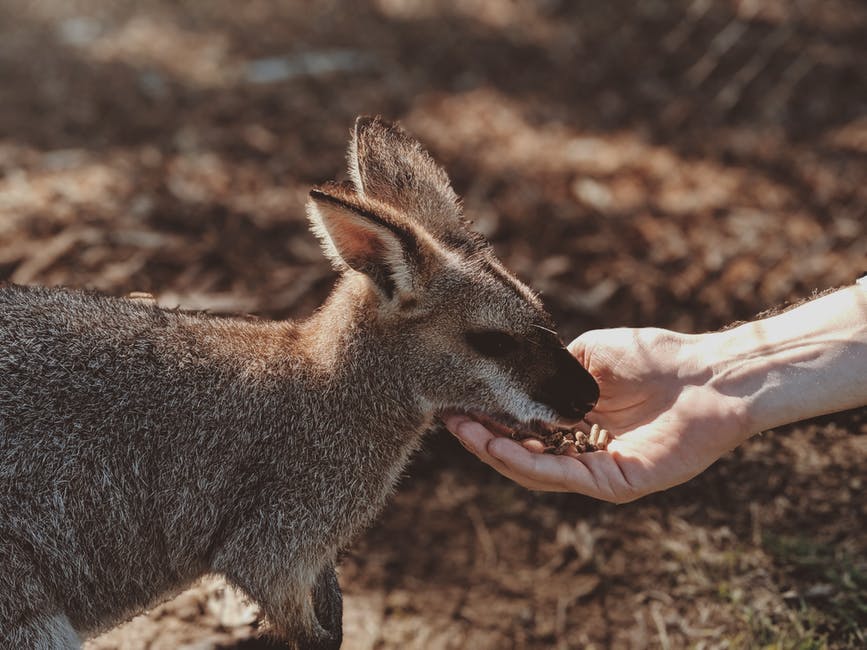
The kangaroo flatulence research, which i.e. A study on kangaroo farts has rewritten the rules of previous research. Researchers from Australia and Switzerland claim that the speed at which the animal’s food passes through their stomachs determines the amount of methane released. This is more important than the type or microorganisms present in their digestive tracts. The Journal of Experimental Biology published the findings of these researchers. It is their largest study to date on methane emission from Australia’s largest marsupials. Since long, scientists have debated the amount of methane that is in the atmosphere from kangaroos. We now have a better understanding thanks to Dr. Adam Munn, at the Institute for Sustainable Ecosystem Solutions, University of Wollongong, and Prof. Marcus Clauss, at the Clinic of Zoo Animals, Exotic Pets and Wildlife, Zurich, Switzerland. After adjusting for weight, why do kangaroos produce less methane (compared to cows)? Catharina Vendl is a PhD student at the University of New South Wales. She was also a veterinarian. Dr. Munn said: “We knew the kangaroos produced little methane but not zero and we remained curious as to why.” Methane released by animals, like cattle, into the atmosphere contributes to global heating. An 2009 study showed that around 51% global greenhouse gas emissions are caused by raising animals for food and getting the produce to people’s homes. According to Dr. Munn, the study contradicts prior research. “The major hypotheses about kangaroos emitting little methane are based on their unique microbiome which produces more methane from flatulence than it does burping like sheep and cows. Our findings, however, do not want to break the bubble of microbiologists. Dr. Munn, along with colleagues, measured the absolute output of kangaroos and compared it with that of horses. The researchers also considered body weight. Professor Clauss said that kangaroos are different from ruminants like sheep or cows in their stomachs. “We believe that methane levels are low due to the movement of food through the stomach of kangaroos and not due to a unique gut fauna.” Researchers found that methane release per ingested food varied between kangaroos and that it depends on the quantity they eat. The food they eat is processed much faster in kangaroos than the food that they eat as ruminants. They produce less methane. This gut fauna method will not work. Kangaroos were fed more restrictively than other animals such as cattle to produce almost the same amount of methane as some livestock. Professor Clauss and Dr. Munn warn that scientists who are trying to lower greenhouse gas emissions by changing ruminant animals’ gut fauna to kangaroos are doing it wrong. They believe this approach is doomed to fail. The team is continuing their research on wildlife methane emissions. This includes the latest findings. Professor Clauss and Dr. Munn have so far measured and monitored methane emission from rodents such as horses, camels. Additional research is needed to understand the reasons why these animals produce lower amounts of methane than cattle or other ruminants. In an abstract in the journal, they wrote: “Kangaroos produce less body-specific CH4 than ruminants. However, this data suggests that these animals only emit about more methane per kilogram of meat than beef and mutton.” Catharina Vedl, Jurgen Hummel and Mathew Stewart. Keith Leggett and Adam Munn. Journal of Experimental Biology. November 2015. DOI: 10.1242/jeb.128165. Video: Study of Kangaroo Gas Emissions
Study of Kangaroo Flatulence shows lower methane emissions than cattle