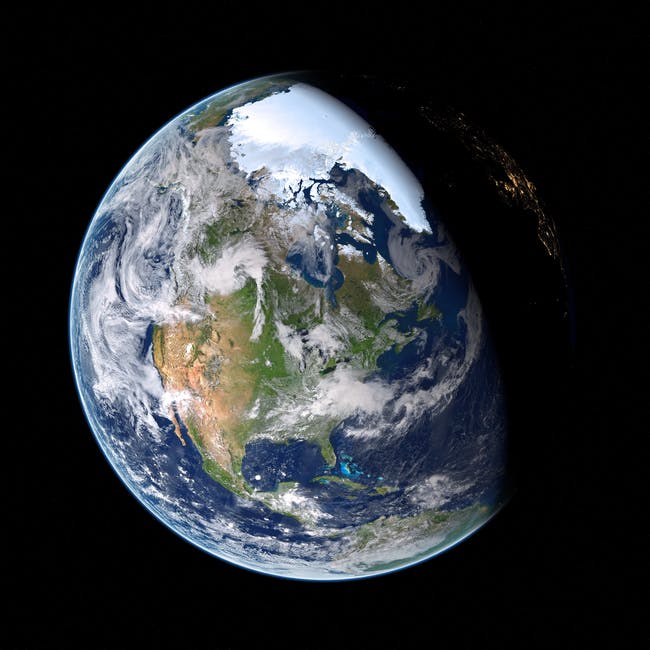
An Australian study revealed that the Earth has been greener since 2003, despite significant losses to the Amazon and Indonesian forests. Global vegetation has increased by nearly 4 billion tonnes, compared with twelve years ago. Researchers performed an analysis on 20 satellite data and published their results in Nature Climate Change. (citation below). They explained that there are many factors which contributed to the rise. The lead author of the study, Dr. Yi Liu of the University of New South Wales’ Centre of Excellence for Climate System Science said that “the increase in vegetation was primarily due to a combination of economic and environmental factors as well as massive tree-planting programs in China.” This is the mean annual difference in above-ground carbon in 1993 and 2012.. Image: Nature. “Vegetation has increased in Australia, Africa, and South America due to increasing rainfall. In Russia, former Soviet republics, we have witnessed the regrowth and planting of trees on farmland. However, scientists warn that there is significant vegetation loss in other areas. Most drastic declines were seen at the Amazon Rainforests’ edge and in the Indonesian Provinces of Sumatra, Kalimantan. A new measurement method was developed to obtain the results. The scientists used satellite measurements of radio waves that were emitted from Earth’s surface as a means of mapping changes in vegetation biomass. Albert van Dijk from the Australian National University was also a lead author. He said, “With our approach, we discovered unexpectedly large vegetation rises in the savannas and northern Australia.” This was despite the ongoing urbanization, land clearing and droughts in other areas of Australia. The greening of Australia means that more carbon has been captured. More rainfall was a key factor in the strong growth of the savannas, especially in recent years. Plants may have grown more vigorously if they had higher CO2 levels. Dr. Pep Canadell is the Director of Carbon Project. From tree height, green savanna. Image: CSIRO Science Images. Dr. Canadell said: “This study indicates that the capture of carbon is sensitive to changes in year-to-year rainfall across savanna areas both for Australia as well as for the global CO2 budget.” Dr. Canadell also stated, “Despite the good news regarding nature’s ability to regulate the planet’s climate, there’s only one way to decrease the effects of global warming.” We know 50% that half of the emissions from human activity remain in the atmosphere, even when the terrestrial vegetation or oceans remove the rest. He stated that the only way to stabilize the climate system was to cut global fossil fuel emission to zero. Citation: “Recent reversal in loss of global terrestrial biomass,” Yi Y. Liu, Albert I. J. M. van Dijk, Richard A. M. de Jeu, Josep G. Canadell, Matthew F. McCabe, Jason P. Evans & Guojie Wang. Nature Climate Change. Published 30 February, 2015. DOI: 10. 1038/nclimate2581.
The Earth’s greenness is greater than it was in 2003, even though Amazon rainforest loss