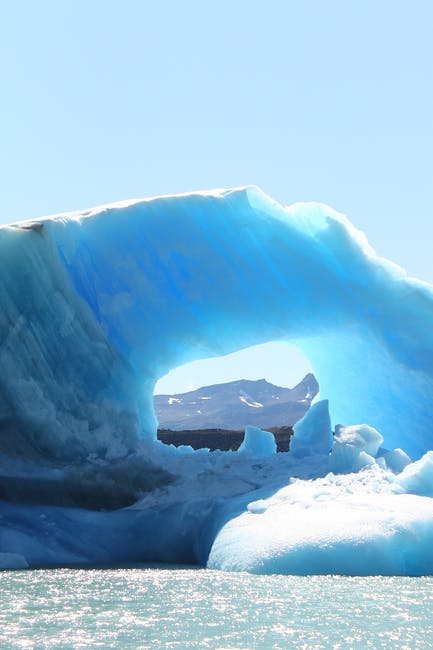
. A new study found that melt glaciers not only cause rising sea levels but also produce large amounts of organic carbon. This could adversely affect marine ecosystems at high latitudes, particularly those around major ice sheet. Major ice sheet-surrounded marine ecosystems receive very low amounts of ocean-to-land fluxes organic carbon. This flow could be affected by melting glaciers. Scientists from Florida, Alaska, and Switzerland are wondering what will happen to the glaciers’ organic carbon when they melt. Nature Geoscience published this study as the first to assess the potential global effects of melting ice sheet. As part of the study, scientists conducted fieldwork in Alaska and Tibet. (Robert Spencer/Florida State. Eurekalert Image. Dr. Robert Spencer, assistant professor at Florida State University said that this is the first effort to determine how much organic carbon exists in glaciers and what amount will be released as they melt. This could have a profound impact on the food web. It is not known how the different ecosystems will respond to this new carbon. Ice sheets and glaciers are home to 70% most of Earth’s freshwater. They are a significant contributor to rising sea level. Glaciers also contain carbon from primary production and the deposition of fossil fuel combustion byproducts. Scientists analyzed data from the Antarctic, Greenland, and mountain glaciers around the world. The scientists wanted to determine the amount of global organic carbon in the global reservoir. According to Dr. Spencer, carbon released from melting glaciers could alter the entire food web. (Image: Florida State University). There is a lot of carbon there. The researchers calculated that the volume of glacier outflow would increase by 50%. over the next year. This is a lot of carbon, equivalent to the half of the carbon added annually to the oceans by melting glaciers. Eran Hood, Ph.D., the University of Alaska Southeast scientist, stated that “this research clearly shows that glaciers are a significant reservoir of organic carbon. According to Dr. Spencer, and his colleagues, further research is being done in order to assess the effects of the carbon released into the existing water bodies. Dr. Spencer stated that people need to consider what the implications are for Earth. While we know that glaciers are disappearing, what does this mean for the ocean, marine life and other downstream issues that matter to us? There are many other issues than the water issue. Nature Geoscience (2015). doi: 10.1038/ngeo2331. 15 March 2014. Accepted 21 December, 2014. Published online 19 January 2015.
The release of massive quantities of carbon from melting glaciers can have a significant impact on marine ecosystems