


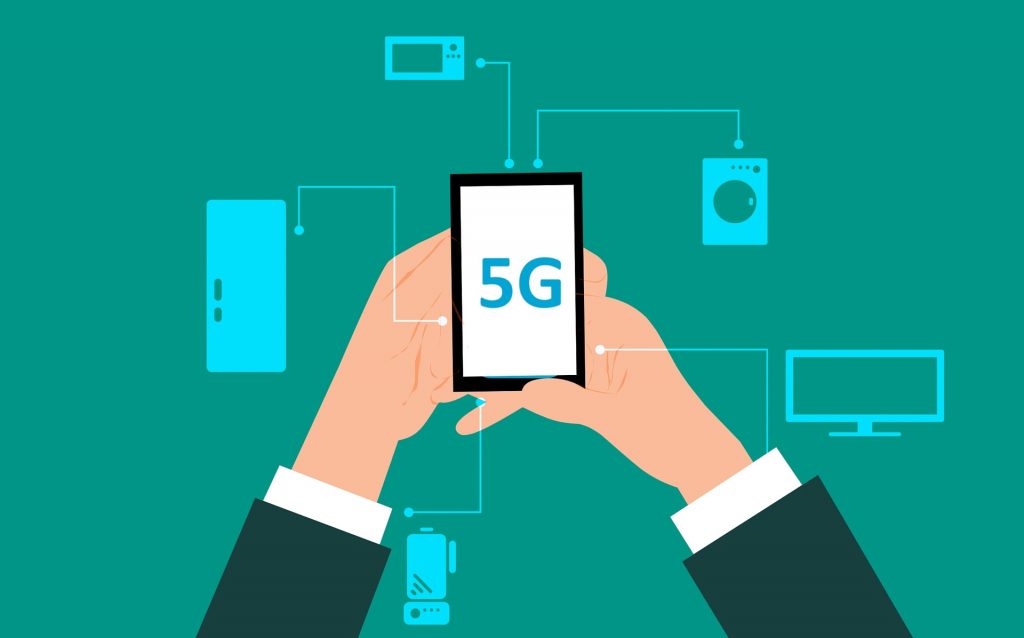
In connection with the new 5G networks for mobile data being developed, there are those who fear that the new 5G networks are dangerous to health. The WHO, World Health Organization, among others, however, concludes that 5G does not entail increased health risks.
More masts and base stations
5G networks operate at higher frequencies than previous 3G and 4G networks. The higher the frequency, the faster the signal strength decreases over distance, i.e. the signal is attenuated faster.
This means that base stations and masts need to be closer to the user to reach. At the same time, this means smaller radio cells that provide higher capacity so it is conscious design. But this does not mean that the exposure to radio signals (RF) needs to be increased only because there are more masts and base stations, rather the opposite because lower power can be used when the distances are smaller.
Lower effects in 5G than in 3G / 4G
Since 5G means shorter distances to be bridged between the base station and customer in combination with a technology called MIMO, which means that the radio signal is actively directed towards the unit that communicates with the base station, lower power can be used than in traditional 3G / 4G networks.
5G networks transmit less when not in use
In the design of 5G, functions have been built-in so that the transmitters should transmit less when not in use, for example at night when the activity is low, compared to today’s 3G / 4G technology.
5G replaces some existing networks
With the expansion of 5G, some existing networks will probably become redundant and wind down. This means that 5G does not necessarily increase the amount of radio signals in the air but replaces other types that are removed.